
August 4, 2026
How to get beach sand out of your car (properly)
Sand works its way into seat rails, seat-belt reels and carpet backing where a vacuum cannot reach. Here is what actually removes it.
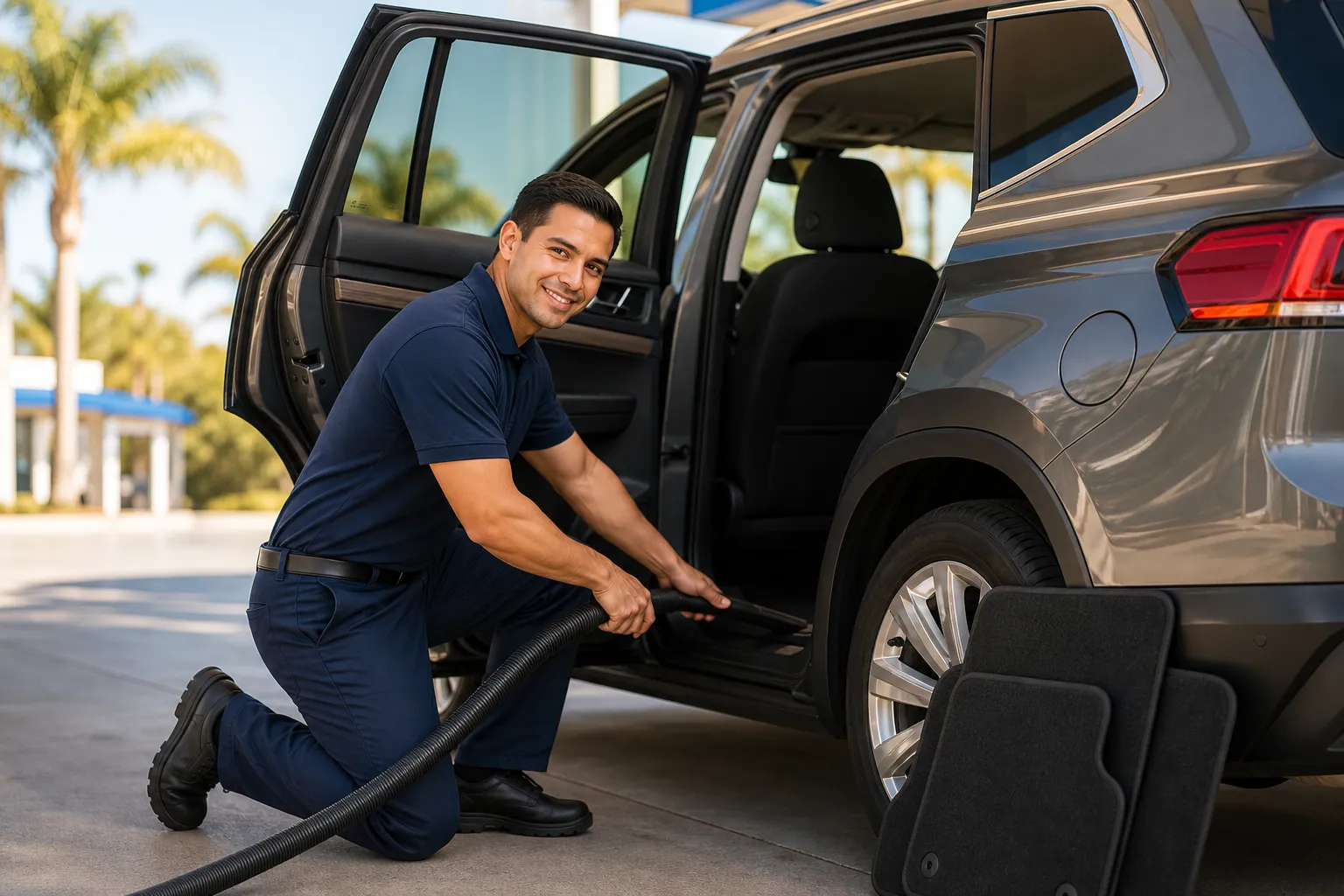
RAT Beach sand is fine, dry and almost weightless, which is exactly why it ends up somewhere a vacuum nozzle will never go.
Where it actually ends up
Not the carpet. The carpet is the first place it lands and the easiest place to clean. Given a few weeks of driving, vibration moves it into:
- The seat rails. Sand falls through the carpet pile and collects in the channels the seats slide on. This is the gritty noise when you adjust your seat.
- The seat-belt reel. Sand rides up the belt and into the mechanism. This is why a beach car’s belt starts retracting slowly.
- Under the carpet backing. Fine sand works through the pile and sits on the floor pan, where it holds moisture against bare metal.
- The door card bottoms and window channels. Every time you lower a window.
None of those are reachable with a shop vac and a crevice tool.
What works at home
Honestly: some of it.
- Take the mats out first. Everything else is pointless while they are in. Beat them, do not vacuum them in place.
- Vacuum with a brush head, not a nozzle. Sand clings to carpet fiber electrostatically. Agitation matters more than suction.
- Work the seat rails with a stiff brush from the back, with the seat all the way forward, then vacuum immediately.
- Do the seams with compressed air if you have a compressor — blow toward the door opening.
That gets maybe seventy percent of it, and it is worth doing between details.
What needs a bay
The step that separates a real interior clean from a good vacuum is an air pistol — compressed air worked into every seam, rail and channel, blowing the sand out where a vacuum can then catch it. It is loud, it makes a mess, and it is why interior detailing happens in a bay rather than a driveway.
On our menu that step is on the Interior Detail and the Complete Detail. The Express Interior Detail at $120 covers mats, carpets and surfaces — the best value if the car is annually sandy rather than years-deep.
The one thing to stop doing
Do not shampoo carpets and leave the car closed up overnight in a marine layer. Damp carpet plus a sealed cabin plus June is exactly how a beach car develops that musty smell. If carpets get wet, they need to dry properly — which is another reason to have it done somewhere with airflow and time.
More notes
- interiors
- beach
- detailing